Review: The Body Horror Book
![[personal profile]](https://www.dreamwidth.org/img/silk/identity/user.png) klward
klwardedited by C. J. Fitzpatrick, Oscillate Wildly Press, 2017
A review by Kyla Lee Ward
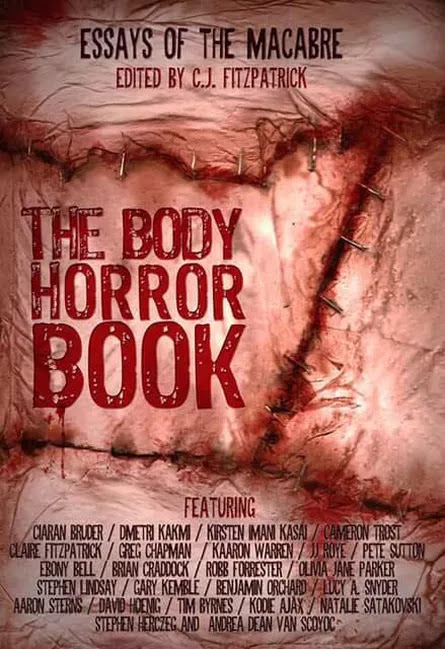
Although the entries include essays, articles, memoirs, poetry and rants, they tend overall to focus on film rather than literature and on the classic works of the 80s and 90s, with much attention given to the first Alien movie, Hellraiser and David Cronenberg's The Fly. But the lead essay, "Eat, Drink and be Wary: Autosarcophagy and Autoeroticism in Body Horror Cinema" by Kirsten Imani Kasai, is also one of the most contemporary, dealing with depictions of cannibalism in such recent films as Raw and Neon Demon, and how the trope dramatises the conflicted attitudes of women towards their own bodies. And what is probably my favourite piece in the whole collection, Anthony Ferguson's "Exposing the Ideological Monster Beneath the Skin: the Reptilians and Other Demons", charts the development of this trope into a full-fledged conspiracy theory that is thriving in the world of Brexit and Trump.
If there is an overall theme to the book, it is that to those who produce it and those who consume it, Body Horror is a very personal thing. As Kakmi points out in "A History of Violence", its effect is immediately inscribed upon the body of the viewer/reader, by way of gut reactions and involuntary shudders. But in "Skin Deep", Sutton writes movingly of his experience of psioriasis and uses this to reflect on skin, as the specific boundary which Body Horror flouts. In her essay, J. J. Roye wonders "...how humanity manages to perpetuate itself without succumbing to crippling fear with each pregnancy", given how this process mirrors the genre's obsession...To read the full review, please go here.